
The Reserve Bank of India, which is scheduled to review the monetary policy on October 30, should not do anything that might make the economic fundamentals of the country uncomfortable, former RBI governor Bimal Jalan said on Tuesday. The central bank is facing a tough task of keeping the economic growth going while keeping inflationary pressures under control.
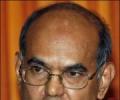
Growing fiscal deficit as a result of governments' efforts to prop up their respective economies has the potential to undermine the autonomy of central banks, whose credibility has already been dented due to the financial meltdown, RBI Governor D Subbarao said on Friday.

If indeed we want the board to manage the RBI, probably the government should take a close look at the US Federal Reserve system which has a two-part structure - a central authority in Washington, DC, and a decentralised network of 12 Federal Reserve Banks located throughout the country, says Tamal Bandyopadhyay.

The government is in the process of setting up of an independent debt management office, aimed at separating RBI's role as the decider of interest rate in the market, and at the same time being the banker to the government.
Rapid depreciation of the rupee put us in a vicious spiral: D Subbarao
RBI's policy stance must address concerns over slowing output

He will look after the Department of Banking Operations and the Development and Urban Banks Department, which were held by Usha Thorat who retired in November last year.

As per the RBI Act, the central bank has to have four deputy governors.
With the inflation rate almost halving from the peak levels in August and economic growth slackening, Planning Commission Deputy Chairman Montek Singh Ahluwalia today said there is further scope for the Reserve Bank of India to cut lending rates.
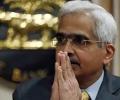
Reserve Bank Governor Shaktikanta Das on Friday stressed that the monetary policy must remain actively disinflationary to ensure that the decline in inflation from its peak of 7.44 per cent in July continues smoothly. Addressing the Kautilya Economic Conclave 2023, he also said price stability and financial stability complement each other and it has been an endeavour at RBI to manage both efficiently. Retail inflation declined to a three-month low of 5.02 per cent annually in September on account of moderation in vegetables and fuel prices, and was back within the Reserve Bank's comfort level.
.jpg)
The truth is the government and the Reserve Bank enjoy a free, frank and cordial relationship.
The Reserve Bank of India on Friday decided to keep the benchmark interest rate unchanged at 4 per cent but maintained an accommodative stance as the economy is yet to recover from the impact of the second Covid wave.

India's current account deficit (CAD) may dip further in the March quarter of FY24 as pressure from the negative net exports during the January-March period eased to an 11-quarter high. A part of the gross domestic product (GDP) data, net export- which is usually negative for India - captures the difference between exports and imports of both goods and services, while the CAD data, released by the Reserve Bank of India (RBI), also factors in private transfer receipts.
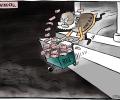
The government has already crossed the fiscal deficit at 132 per cent of the estimate as of December end.
RBI raised lending rates to commercial banks 2 per cent to 10.25 per cent making loans costlier.
The Reserve Bank of India on Tuesday kept key rates unchanged.

The RBI Governor says he does not have a specific foreign exchange rate target, which raises concerns that the central bank is unlikely to defend any particular level strongly.

A committee headed by Patel recommended retail inflation targeting and a monetary policy committee.
The IPO scam came to light in 2005 when the private 'Yes Bank' launched its initial public offer, which saw one Roopalben Panchal of Ahmedabad opening multiple fake demat accounts.

Tata Steel was the top gainer in the Sensex pack, rising around 4 per cent, followed by Infosys, Bajaj Finance, TCS, HCL Tech, ICICI Bank and Tech Mahindra. On the other hand, Bharti Airtel, M&M, L&T and Axis Bank were among the laggards.
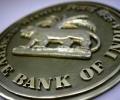
The central bank is conducting a series of these meetings with individual banks as it prepares to announce the annual monetary and credit policy for the financial year 2011-12 on May 3.
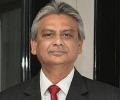
Patra, as executive director of the central bank, was the principal advisor to the Monetary Policy Department since July 2012.

The decision by the Reserve Bank of India to introduce a unified regulatory framework on connected lending for all the regulated entities (RE) is expected to reduce the influence of business conglomerates in the Indian lending space, said bankers and experts. "Connected lending pertains to lending to related parties within the same business group. "While the RBI might appear more agreeable to allowing business conglomerates to own banking licenses, it deems it crucial to bolster regulations that would prevent conglomerate-owned banks from gaming the system," said Shivaji Thapliyal, head of research and lead analyst, YES Securities.

There is little scope for significant monetary easing even in the next fiscal year.

If the policy is extended to NBFCs and co-operative banks, they will have to disclose divergence in asset classification and provisioning during RBI inspections in their audited financial reports. Till now, these entities have been exempted from this. At present, there are more than 98,000 co-operative banks and 10,000 NBFCs. Sources said the RBI would concentrate on the top 50 co-operative banks and NBFCs.

The repo rate has been left unchanged at 4 per cent, Governor Shaktikanta Das said while announcing the decisions taken by the central bank's MPC.
Reserve Bank of India on Friday said the inflation for the 2004-05 will be lower than estimated 6.5 per cent and the economic growth will be higher than projected 6-6.5 per cent.

There is so much liquidity in the system, in the global economy, and that's why the stock market is very buoyant. It will certainly witness correction in the future: RBI's Das.
India's bank credit remains resilient and is showing no signs of systematic risk, Reserve Bank of India (RBI) Deputy Governor Michael Patra said on Monday. A copy of the speech was uploaded on the RBI website on Thursday. "Bank credit is monitored as a lead indicator of overheating. Our assessment, based on a menu of approaches, indicates that current rates of credit expansion are not pointing to systemic stress building up. Illustratively, the credit gap - the difference between the credit to GDP ratio and its trend - is currently negative," said Patra, while delivering a speech in Cambodia.

The IMF expressed its opposition to any move that compromises the independence of central banks anywhere in the world.
In its Third Quarter Review of Monetary Policy 2012-13, the Reserve Bank of India has reduced the policy repo rate under the liquidity adjustment facility (LAF) by 25 basis points from 8.0 per cent to 7.75 per cent with immediate effect.
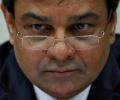
In his first comments after resigning as RBI governor on December 10 last year amid sharp differences with the government, Patel said banks indulged in over-lending, while the government did not "fully play" its role, and also conceded that the regulator should have acted earlier.
RBI said the continuing sluggishness of the global economy led to some moderation in exports growth and invisible receipts, while import growth accelerated due to the strong domestic recovery.

With budgetary preparations on in full swing, the Reserve Bank of India on Friday advised the Finance Minister to at least partially roll back the stimulus that was provided to help the industry cope with the financial crisis.

Pressure has been mounting on the Reserve Bank of India to cut interest rates in the wake of declining retail inflation and the need to fuel growth momentum. However, the RBI will have to do a tightrope walk as globally interest rates are inching upwards.
The Centre's fiscal consolidation resolve led to the cut in banks' mandatory SLR for the second time in a row, RBI Governor Raghuram Rajan said on Tuesday, hinting at more such liquidity enhancing steps in tandem with the government's action on fiscal deficit.
The finance ministry and the Reserve Bank are keeping a close watch on price movements in a bid to ensure that inflation remains moderate amid volatile global oil prices.

Rajan had cautioned against any deviation from the fiscal discipline path.

After all, India is the only one among the BRIC nations (Brazil, Russia, India and China) where lending rates are still ruling at their 2008 peaks.
